Nairobi National Park Without a Tour: Can You Do It on Your Own?

Short answer: yes. Nairobi National Park allows self-driving, no guide is required, and the Giraffe Centre and elephant orphanage are an easy rideshare hop for anyone. The longer answer is that the park rewards people who know where the animals were this morning, and that knowledge travels by guide radio, not by park map. We have done this both ways, so this guide lays out exactly how far you can get independently, what it really costs once the fees and vehicle are counted, and the specific cases where a guided drive honestly earns its price. If you land on the tour side, compare the Nairobi wildlife day tours we track before booking.
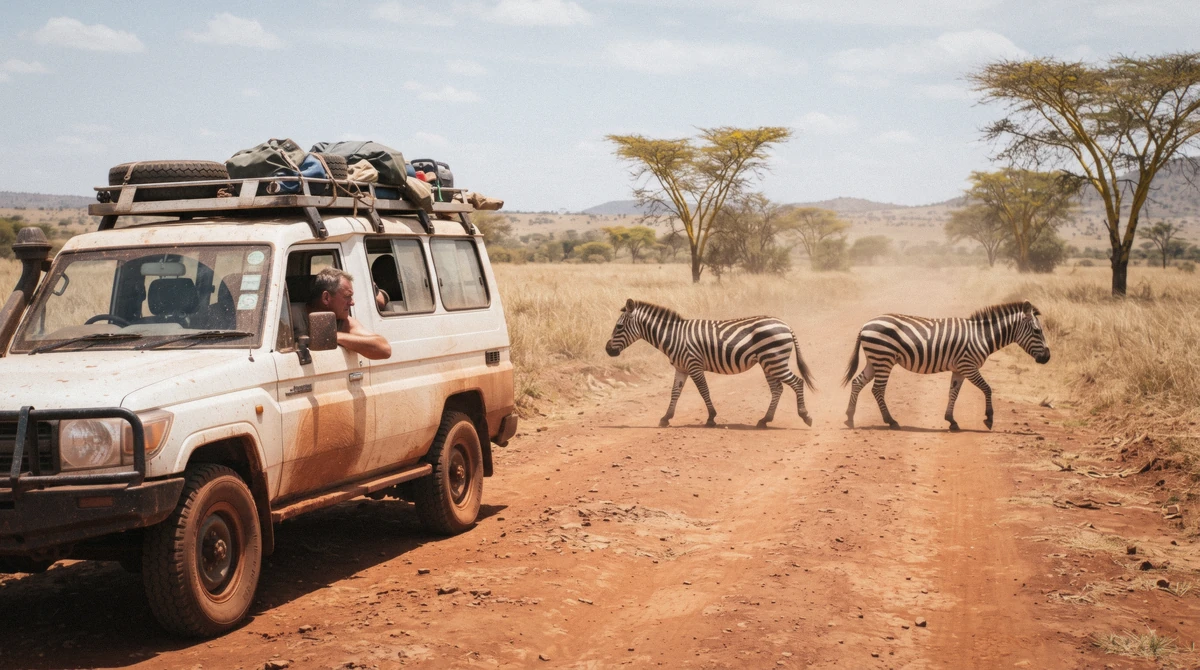
Quick answer
Yes, you can visit Nairobi National Park without a tour: self-driving is officially allowed, no guide is required, and the Giraffe Centre and elephant orphanage are an easy rideshare trip. The catch is finding the animals, which guides do by radio and first-timers do by luck.
Key takeaways
- Self-drive is legal and signposted; pay fees on eCitizen the night before
- Ordinary car works June to October and January to February; 4x4 in the rainy months
- You may not leave the vehicle except at the gate complex and the ranger-led Hippo Pools trail
- Solo and couples usually save money with a shared game drive; groups of 3-4 with a car save by self-driving
- Giraffe Centre and Sheldrick orphanage need no tour at all, just bookings and a rideshare app
The Short Answer: Do You Need a Tour?
Kenya Wildlife Service lists self-drive as a normal way to visit, alongside hired tour vehicles. You pay park fees through the eCitizen platform, get a map at the gate, and follow a signposted road network at up to 50 km/h. Nobody will ask where your guide is.
The real constraints are practical, not legal. You may not leave your vehicle except at designated points, off-track driving is prohibited, and from March to May the park's black cotton soil turns greasy enough that KWS recommends a 4x4. Most importantly, wildlife here moves across 117 square kilometers, and finding the rhinos on any given morning is the entire skill. Guides share sightings over radio in real time; a first-time self-driver is searching blind.
For the attractions outside the park gate the calculation flips completely: the Giraffe Centre and the Sheldrick orphanage need no vehicle knowledge at all, just a booking and a rideshare app.
Self-Drive vs Taxi vs Guided Tour
Numbers are per adult at current rates and assume the standard morning game drive. We added the taxi option here because readers ask about it often, even though most drivers turn back once they learn what the wait actually costs.
| Option | Cost per person | Convenience | Wildlife experience | Best for |
|---|---|---|---|---|
| Self-drive | $50-80 fees + car from $40/day | You handle everything | Your route, your luck finding animals | Groups of 3-4, repeat visitors |
| Taxi or hired driver | Fees + your entry-paid driver, most decline the wait | Door to door, but waiting is the problem | Driver is not a spotter | Short visits when self-drive feels like too much |
| Guided tour | From $37 + fees, or $70-95 all-in | Pickup, fees, and timing handled | Guide radio network finds the animals | First visits, solo travelers, layovers |
Which Option Fits You?
A quick match between your situation and the option that fits it best:
| Situation | Best option |
|---|---|
| One day in Nairobi | Self-drive, or the morning shared drive |
| First safari ever | Guided drive; the radio network is the difference |
| Group of 3-4 on a budget | Rent a car and split it |
| No licence or no appetite for left-hand traffic | Tour with hotel pickup |
| Photographer wanting to linger at sightings | Self-drive, or a private tour |
Can You Visit Without a 4x4?
In the dry months, June through October and again in January and February, an ordinary sedan handles the main circuit without trouble. The graded loops stay firm, and two-wheel drive is not a handicap on a clear morning.
From March through May the black cotton soil changes the equation completely. A section that looked solid the day before turns greasy after one afternoon shower, and a two-wheel-drive car parked in it becomes a KWS ranger's problem to solve, not yours to fix. In those months, a 4x4 is the difference between a game drive and a recovery story.
- Look for real ground clearance, not a raised badge on a city crossover
- Confirm a working spare wheel and jack before you leave the rental lot
- Get written confirmation that the insurance covers park tracks, not just paved roads
- Collect the car the evening before a dawn gate opening; no agency opens at 5:30
Can You Take an Uber to Nairobi National Park?
Rideshare apps work well for getting to the Main Gate from Karen or Langata, and plenty of visitors do exactly that before switching to a rental or a tour vehicle for the park itself.
Inside the park the picture changes. A rideshare driver who enters with you pays their own entry fee and then waits, often three to four hours, for the return trip. Most drivers see that math and decline before they even reach the gate.
The return trip is the part people forget to plan. There is no pickup point deep inside the park, and phone signal is patchy away from the gate complex, so arranging a driver to come back for you rarely works out.
The realistic split: rideshare for the Giraffe Centre and the elephant orphanage, a tour vehicle or a rental car for the park itself.
Can You Visit Nairobi National Park by Public Transport?
Honestly, no, not in any practical sense. No matatu route serves the park gates in time for a 6:00 entry, and once you are inside there is no public transport of any kind between sightings. The car-free options that actually work are the shared drive with hotel pickup for the park itself, or a rideshare straight to the gate if your day is really about the Safari Walk side rather than the game drive.
How to Buy Your Ticket, Step by Step
Buying a ticket without a tour is a short task once you know the order:
- 1. Create an eCitizen account the evening before your visit
- 2. Select Nairobi National Park, your date, and your visitor category
- 3. Pay by card or M-Pesa; the gate does not accept cash
- 4. Save the confirmation offline, since signal at the gate is weak
- 5. Show the QR code with matching ID at the gate
- 6. Keep the receipt until you exit, the far gate checks it too
Current tariffs live on the Kenya Wildlife Service site and payments run through eCitizen.
Which Gate Should You Use?
Main Gate sits on Langata Road at KWS headquarters, hands out the paper map, and sits closest to the Safari Walk, the Animal Orphanage, and most rental car returns.
East Gate sits off Mombasa Road, which makes it the practical choice from the airport or on a layover, and its queue at 6:00 is usually the shorter of the two.
If your day starts or ends near the airport, use East Gate. Everyone else does fine at Main Gate.
Is Self-Driving in the Park Safe?
Yes, with a few practical habits. The roads are graded but corrugated in places, so the 50 km/h limit is as much about your suspension as the rules.
Getting lost is the real risk, not wildlife. Download the offline map area the night before, and photograph the paper map at the gate as a backup once your phone battery starts dropping.
Keep windows up near primates, since baboons and vervet monkeys will reach through an open gap for anything that looks like food, and keep them fully closed at any cat sighting. Keep the fuel gauge above half; there are no pumps inside the park.
If a wheel sinks into mud, stay in the vehicle and call the number printed on your ticket. A ranger vehicle reaches most points inside an hour. The park-wide picture, rules, risks and who should think twice, is in is Nairobi National Park safe.
Self-Drive Checklist Before You Enter the Gate
Run through this before the wheels cross the gate line:
- Offline map of the park downloaded
- eCitizen payment confirmation saved offline
- ID or passport for every visitor
- At least half a tank of fuel
- Real spare wheel and jack checked
- Water and snacks, nothing is sold inside
- Binoculars
- No single-use plastic bags, banned in Kenya
The Route That Works Without a Guide
Guides improvise around whatever the radio reports that morning. Without one, this fixed loop is the best blind route we know, built from the same logic guides use before the radio chatter starts:
- 6:00, Main Gate at opening
- 6:00 to 8:00, forest edge and rhino circuit while the light is still soft
- 8:00 to 9:30, Athi dams and the open plains loop
- 9:30, Hippo Pools ranger-led walk, the one stop where you leave the car
- before 11:00, out through East Gate ahead of the flattened midday light
Photography without a guide
The first ninety minutes after 6:00 carry the best light of the day. Shoot from the window with the engine off, since even idling vibration shows up at longer focal lengths. Dust rises off the tracks after about 10:00 and softens everything behind it.
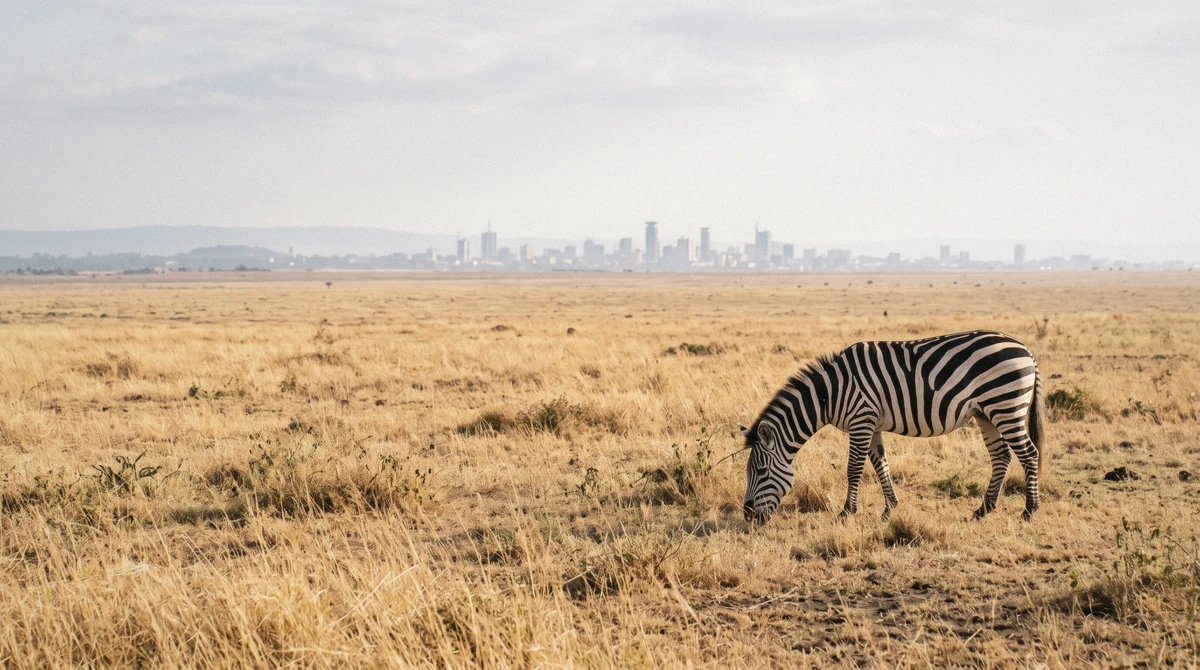
A zoom lens earns its seat on this drive more than on almost any other safari. The skyline shot, animals in the foreground with Nairobi's towers hazy behind them, works best from the open plains looking north.
Can You See Lions Without a Guide?
Yes, and people do it most weeks. The odds simply drop without a radio network reporting where the pride slept.
Lions flatten into the grass by mid-morning and become genuinely hard to spot from a car at eye level, which is where a raised tour vehicle has the real advantage. Rhino sightings are the more reliable solo win in this park; rhinos move less and stand out against open ground.
If seeing a lion is the entire point of your visit, that single fact is the strongest argument for the $37 shared drive rather than a case against self-drive generally.
Self-Drive Mistakes We See Constantly
The same five mistakes account for most of the disappointed self-drive stories we hear:
- Arriving at noon, when the cats have gone to ground and the light has gone flat
- Assuming the gate takes cash; the switch to eCitizen made the park fully cashless
- Skipping binoculars, which self-drivers need more than tour guests riding a raised vehicle
- Bringing a low sedan into the park in April, the middle of the wet season
- Forgetting the 19:00 gate closing and losing the last hour to a rushed exit
Our full mistakes guide covers the planning traps that go beyond the gate too.
Is It Worth Visiting Without a Guide?
What we genuinely like
- Cheapest option per person for a full vehicle
- Total route freedom, no fixed circuit
- Sit at one sighting as long as you want
- No fixed pickup times to plan around
The honest downsides
- No radio network reporting sightings
- Navigation and park rules are entirely on you
- A 4x4 becomes necessary in the rainy months
- Solo travelers pay more than they would on a shared tour
Who it's NOT for: first-time safari visitors who want maximum sightings per hour, that is what the guided morning is for.
What a Solo Visit Really Totals
The crossover point sits around three people; below that, the shared tour is usually the better deal.
| Visitor | Park entry | Vehicle | Extras | Realistic total |
|---|---|---|---|---|
| Solo self-driver | $50-80 | Car $40-90/day + fuel | Snacks, offline maps | $110-190 |
| Couple self-driving | $100-160 | Same car, split | Same | $80-120 each |
| Group of four | $200-320 | 4x4, split four ways | Same | $70-100 each |
| One person on a shared tour | $50-80 fees | Included | Tip $5-10 | $95-130 |
Where Everything Is
Everything wildlife-related sits along the park's northern edge off Langata and Magadi Roads, 20 to 40 minutes from the city center outside rush hour.
How Far You Get on Your Own
Inside the park
In the dry months from June to October and in January and February, an ordinary saloon car genuinely works: the main circuit is graded and the signage is decent. Stick to the marked tracks, keep windows sensible around primates, and budget three to four hours for the loop. During the long rains from March to May the black cotton sections become the real filter, and getting a two-wheel-drive stuck ends your morning and your dignity; take a 4x4 or take a tour in those months, as we explain in our best time guide.
Walking is the hard no. Outside the gate complex, the only place to leave your vehicle is the Hippo Pools trail, where a KWS ranger walks with you. Everything else, including that tempting photo angle, happens through the window or the roof hatch.
Outside the park
The Giraffe Centre and the Sheldrick orphanage are the easiest DIY wins in Nairobi. Both are short rideshare trips from Karen or Langata, both take card or M-Pesa at the entrance, and neither needs a guide for anything. The single trap is the orphanage's booking system: the 11:00 public hour sells out, and arriving unbooked usually means watching the gate instead of the elephants.
A Self-Drive Morning That Works
If you go independent, borrow the guides' structure instead of improvising:
-
05:30
Leave Karen or the CBD
With a full tank; Langata Road is empty at this hour
-
06:00
Main gate at opening
eCitizen confirmation ready on your phone, collect the paper map
-
06:10-08:00
Forest edge and rhino circuit
While the cats are still on the move
-
08:00-09:30
Work the dams
Hippo sightings, buffalo, and the best birding of the morning
-
09:30
Hippo Pools trail with the ranger
The one legal leg-stretch inside the park
-
10:30
Exit
Decide over coffee whether the afternoon is giraffes, elephants, or a nap
What Doing It Yourself Really Costs
Line items for one adult doing the park self-drive, dry season:
- Park entry: $50-80 via eCitizen, confirmed at the gate
- Car hire: from about $40 per day for a saloon, $70-90 for a 4x4, plus fuel
- Rideshare alternative: drivers can enter with you, but you pay their entry too and most decline the wait
- Giraffe Centre add-on: KSh 1,500 entry plus a $4-6 hop from the park side
- Sheldrick add-on: about $47, booked online days ahead
The arithmetic turns on group size. A solo traveler hiring a car spends more than a $37 shared game drive before fuel. A family of four splitting one 4x4 beats almost every tour price per person.
Three or more people with a confident driver is where self-drive genuinely wins; one or two people is where it quietly loses. The full fee picture for every attraction is in our prices guide.
Renting a car for the park: what to check
The rental conversation matters more than the rental price. Ask for genuine ground clearance rather than a badge, a real spare wheel with a jack that works, and written confirmation that park tracks are covered by the insurance, because some Nairobi agencies quietly exclude them. Collect the car the evening before; no agency opens early enough for a 6:00 gate. Fuel up on Langata Road the night before too, and keep the tank above half, there are no pumps inside the park and idling at sightings burns more than you expect.
One more Nairobi-specific note: the gate queue moves on phones, not paper. If your rental pickup ate your data plan, sort it before the morning, because downloading an eCitizen confirmation over the gate's shared signal is its own safari.
No Car at All? The Half-Day That Still Works
Plenty of readers land here without any intention of driving in Kenya, and there is a genuinely good tour-free half day available on rideshares alone. Book the Sheldrick 11:00 hour in advance, leave the hotel around 10:00, and after the elephants take the short hop to the Giraffe Centre for the early afternoon, when the platform crowd thins. Total cost lands around $70-75 in entries plus perhaps $15 in rides, and at no point do you need a guide, a 4x4, or nerves.
What this plan cannot include is the national park itself, because arriving at the gate without a vehicle leaves you exactly there. If the park matters, that is the moment to borrow one morning from the tour side of this comparison: the shared game drive exists precisely for car-free travelers, and the rest of the day stays independent.
When Skipping the Tour Is the Right Call
We genuinely recommend self-drive when the profile fits. No hedging:
- You have visited before and know the dam loops from the forest edge
- You live in Nairobi or have a rental car anyway, making the marginal cost tiny
- You are three or four people who can split a 4x4
- You are a birder or photographer who wants to sit at one spot for an hour, which no shared tour will do
- Your target is only the Giraffe Centre and the orphanage, where a tour adds convenience but no access
When a Tour Genuinely Earns Its Price
The honest cases for booking, from someone who would rather you not waste money:
First visits. The difference between a guided morning and a blind one is usually two or three major sightings, because guides hear about the rhinos before you have found the right junction. On a one-shot visit that difference is the whole trip.
Solo travelers and couples. The per-person math of the shared game drive simply beats a hired car for one or two people, and the pop-top vehicle sees over grass that a saloon cannot.
Tight schedules. A layover safari with airport pickup turns a connection into a game drive with zero navigation risk. And if you want the vehicle to yourself with a flexible route, the private option exists exactly for that.
Rainy months. From March to May the roads are the guides' home advantage, and their 4x4s are already muddy.
Rules That Apply Either Way
KWS enforces these, and the fines are not theoretical:
- Stay on designated tracks; off-road driving is prohibited everywhere in the park
- 50 km/h maximum, and slower near any sighting
- No leaving the vehicle except at the gate complex and Hippo Pools
- No drones without a KWS permit, which casual visitors will not get
- Gates run 6:00 to 19:00; plan to exit before closing, not at it
- Everything is cashless: eCitizen for fees, card or M-Pesa elsewhere
Frequently Asked Questions
Do you need a guide to enter Nairobi National Park?
No. Self-driving is officially permitted, the road network is signposted, and a map is provided at the gate. A guide is a sightings multiplier, not a requirement.
Can a normal car handle Nairobi National Park?
In the dry months, yes, the main circuit works in an ordinary saloon. From March to May the black cotton soil sections demand a 4x4, and KWS advises accordingly.
Can you take an Uber into Nairobi National Park?
Technically a driver can enter with you if you pay their park entry, but most decline the multi-hour wait. Rideshare works brilliantly for the Giraffe Centre and Sheldrick orphanage instead, and a tour vehicle solves the park itself.
Can you walk anywhere inside the park?
Only at the Hippo Pools trail, accompanied by a KWS ranger, and at the gate complex. Everywhere else you stay in the vehicle, which is exactly how you want it in lion country.
Is self-drive cheaper than a tour in Nairobi?
For three or four people sharing a 4x4, usually yes. For one or two people, the shared game drive from $37 plus fees beats hiring a car once fuel and hassle are counted.
Where do you pay Nairobi National Park fees without a tour?
Through the Kenya Wildlife Service eCitizen platform, ideally before you arrive. The gate verifies the payment; nobody accepts cash there.
What time should you enter Nairobi National Park for the best sightings?
At 6:00, when the gates open. The first two hours are when lions and rhinos move in the open and the light is at its best; by late morning the cats flatten into the grass and self-drivers with no radio network feel it most.
Is self-driving in Nairobi National Park safe?
Yes, by any reasonable standard. You stay inside a vehicle on marked tracks, the animals treat cars as scenery, and rangers patrol the network daily. The real risks are mundane: a two-wheel-drive in wet-season mud, an empty tank, or lingering past the 19:00 gate closing. Handle those three and the park is one of the calmest self-drive safaris in Africa.
Can you visit Nairobi National Park by public transport?
No practical route exists for a dawn entry, see the section above for the realistic car-free options.
Do you need to book Nairobi National Park tickets in advance?
Same-day eCitizen payment technically works, but do it the night before on hotel wifi. Gate signal is weak, and a failed payment at 5:45am is not how anyone wants to start a game drive.
Which gate is best for a layover visit?
East Gate, off Mombasa Road. It sits closest to the airport side and usually has the shorter queue at opening.