First Time Safari in Nairobi: What to Expect, Step by Step
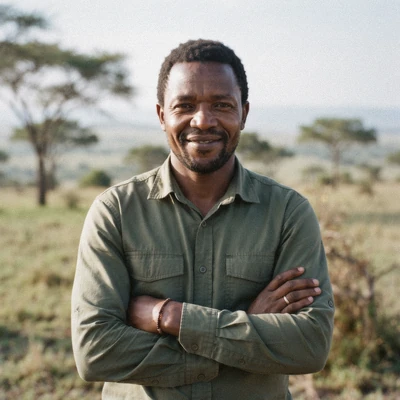
You don't need any safari experience, or even much stamina, for your first game drive in Nairobi National Park. Guides do the animal-spotting, the vehicle does the work, and the whole outing runs closer to a scenic morning drive than an expedition. My own first morning here I worried about missing every animal or asking something obvious over the radio; ten minutes past the gate, with a lioness stretched out thirty meters from the vehicle, that worry was gone. What follows is the exact minute-by-minute walkthrough, the fears that turn out to be nothing, and which tour suits a total beginner best. Compare every beginner-friendly Nairobi wildlife tours option before you book.
Quick answer
No safari experience is needed for a first visit to Nairobi National Park. You don't need binoculars skill, hiking fitness, or any prior knowledge; guides spot the wildlife and narrate everything as you go, and the whole game drive happens from a seated position in the vehicle.
Key takeaways
- No prior experience or fitness test is required; the activity is guide-led and entirely vehicle-based
- Guides handle all animal-spotting and route knowledge, so there's nothing technical for a first-timer to learn beforehand
- A morning game drive runs three to four hours of active viewing, longer if combined with the Giraffe Centre or the elephant orphanage
- The most common first-timer worry, missing a sighting or asking a wrong question, dissolves within the first twenty minutes for nearly everyone
- The most common beginner mistake is booking a last-minute afternoon slot instead of the cooler, more active 6:00 morning window
- The $37 shared morning drive is the most straightforward first tour on this site
Do You Need Any Experience?
None. The guide handles the driving, the route-finding, and the species identification; passengers watch and ask questions. There's no equipment to fit or learn beforehand beyond what the vehicle already has, an open roof or a pop-up hatch, and nobody expects you to identify a bird or judge a distance correctly on your own.
Fitness demands are genuinely low: you're seated for most of a three to four hour drive, with occasional standing through a pop-up roof that asks nothing more than holding a rail. If a short walk at the Hippo Pools is offered, it's flat, guided, and entirely optional. The closest thing to a skill here is patience, waiting quietly while a guide reads tracks or radio chatter to decide where to head next, and that's something everyone in the vehicle does together rather than a test any one passenger has to pass alone.
How Fit Do You Need to Be?
The real physical demands are modest: sitting for most of the drive across some rutted dirt track, occasional standing through a pop-up hatch, and, if the Hippo Pools stop is included, a short flat guided walk of about fifteen minutes. If the day extends to the Giraffe Centre, add one flight of open stairs to a raised platform. None of this asks much of an average adult, and most complete beginners handle the whole day without a second thought.
Anyone with balance issues that make a moving, occasionally bumpy vehicle a concern, or anyone who cannot manage a single flight of stairs unaided if the Giraffe Centre is part of the day, should ask their doctor first; for the fuller list of medical and physical restrictions, see our guide on whether Nairobi National Park is safe.
What Happens on Your First Safari: Step by Step
The chronology below is the standard rhythm most first-timers actually experience, start to finish.
| Stage | How long | What happens |
|---|---|---|
| Booking and the night before | - | Pickup time confirmed the evening before; little to prepare beyond a warm layer |
| Pickup | 5:45, a few minutes | Collected from your hotel while it's still dark |
| Gate arrival | 6:00, about 15 minutes | Through the main gate as it opens, first light photos |
| First stretch | 6:15 to 8:30, about 2 hours | The most active viewing window, frequent stops |
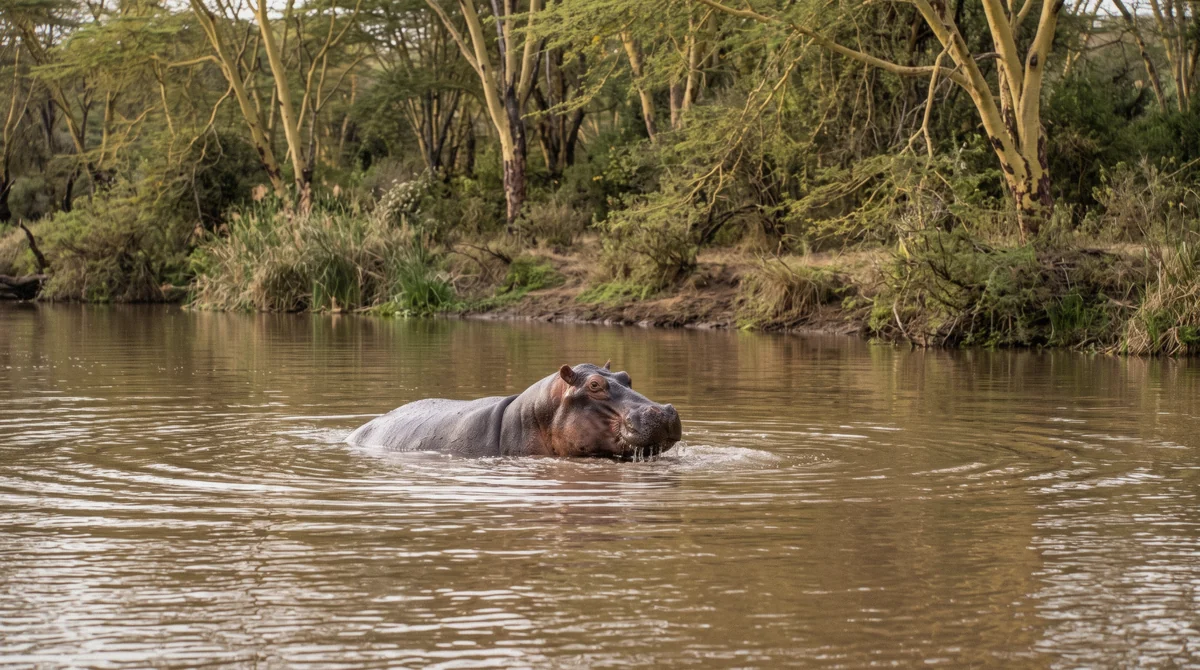
| Dams and plains loop | 8:30 to 9:30, about 1 hour | Hippos and buffalo, optional walk at Hippo Pools |
| Sheldrick elephant orphanage | 11:00 to 12:00, 1 hour | Standing viewing window, if part of your day |
| Giraffe Centre | Afternoon, 1 to 1.5 hours | Feeding platform, if part of your day |
| Heading back | 30 to 60 minutes | Return to your hotel before rush hour |
Booking and the night before
A confirmation message arrives with a pickup window, usually reconfirmed by phone or WhatsApp the evening before. There's genuinely little to prepare: lay out a warm layer for a cold start and charge a camera battery.
The 5:45 pickup and the 6:00 gate
Pickup from your hotel happens around 5:45 while it's still dark. A short drive brings you to the main gate as it opens at 6:00, with a few minutes for the guide to complete Kenya Wildlife Service paperwork while you take in first light over the plains.
The first stretch, 6:15 to 8:30
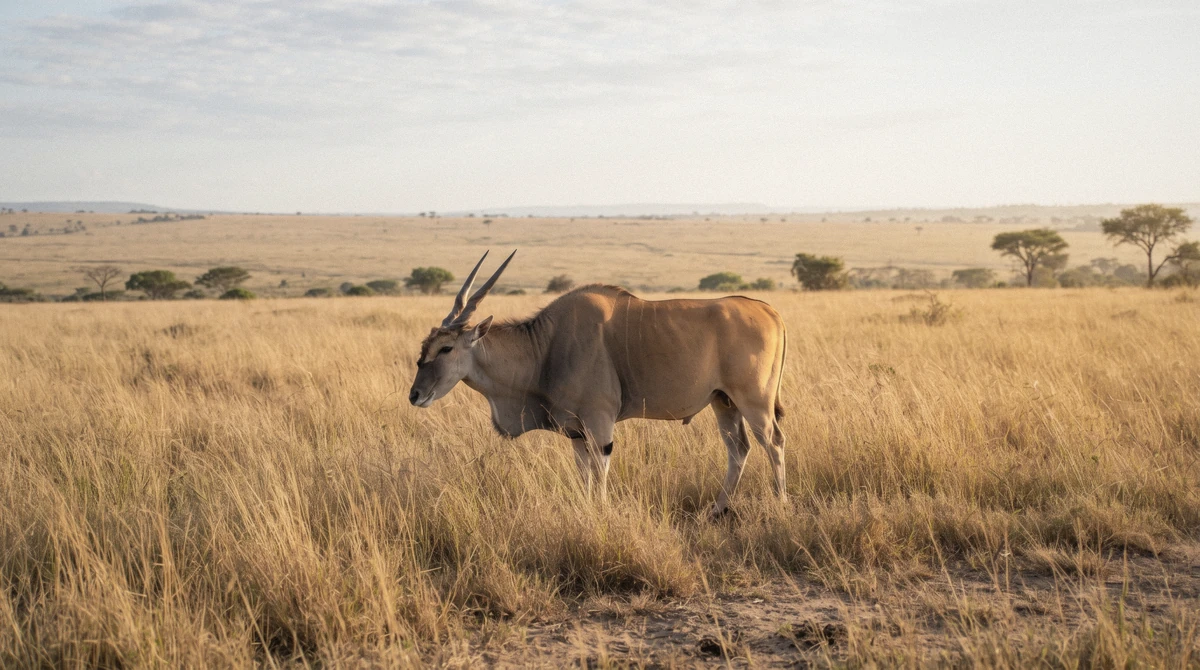
This is the most productive window of the day, cats and rhinos moving in the cool early light, frequent stops as the guide spots something ahead and cuts the engine to a whisper. Lions and rhinos turn up on most mornings; cheetahs and leopards far less often, and no guide can honestly promise a specific sighting.
The dams and plains loop, 8:30 to 9:30
A slower stretch past the park's water points, hippos, buffalo, and open grassland, sometimes a breakfast stop where permitted. If a ranger-led walk at the Hippo Pools is offered, this is the one moment you leave the vehicle on foot.
Sheldrick and the Giraffe Centre, if part of your day
The Sheldrick elephant orphanage runs a fixed one-hour public window at 11:00, standing rather than seated. The Giraffe Centre in the afternoon lets you feed Rothschild giraffes from a raised platform, and it's usually the most universally enjoyed stop of a combination day.
Heading back
Park-only mornings are typically out of the gate by 10:00 to 10:30. Combination days drop you back at your hotel by mid-afternoon, timed to beat Nairobi's worst rush-hour traffic. Tip your guide $5 to $10 per person at the end, the accepted norm here, cash or M-Pesa both work.
What It Actually Feels Like
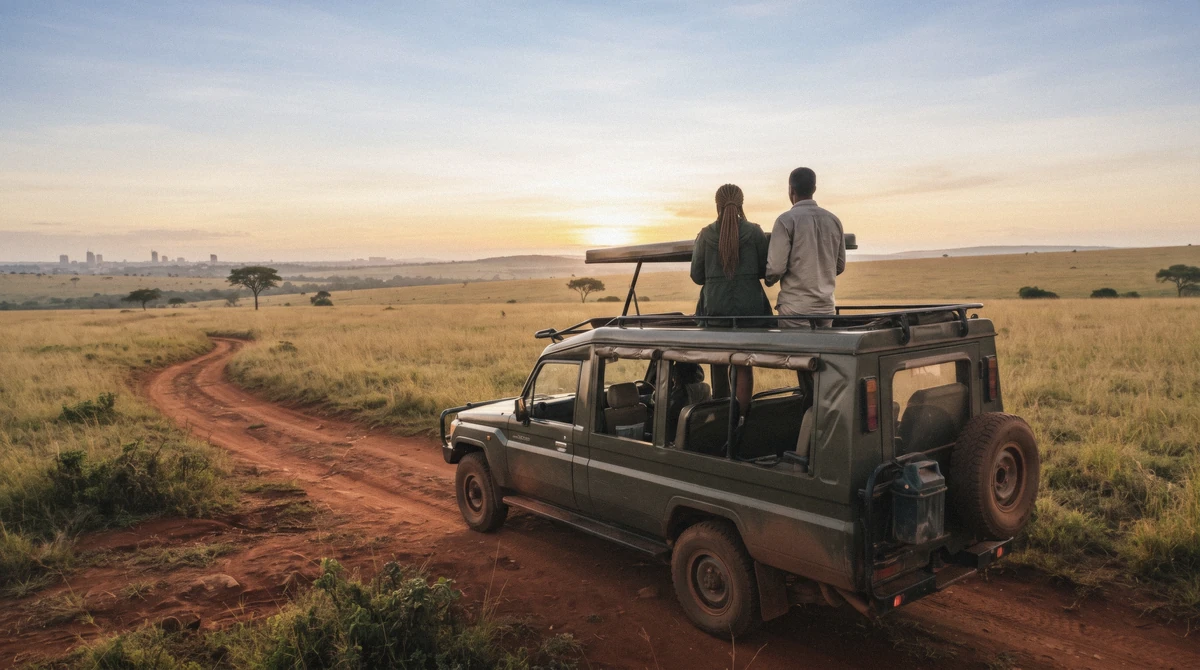
The cold air at the 6:00 start has a real bite, cutting through a t-shirt within minutes of the gate opening. The vehicle's engine drops to an idle or cuts out completely near a sighting, and the quiet that follows is often the most striking part of the whole morning, no music, no chatter, just wind and the occasional bird call. A pop-up roof means standing with wind on your face rather than looking through glass, and the smell shifts constantly, dust, wild sage, and occasionally something sharper near a pride of lions.
The dirt track jostles noticeably more on the dams loop than on the smoother main circuit, enough that a coffee cup would spill but not enough to feel unsafe. Radios crackle between vehicles when a guide spots something worth sharing, and that chatter is part of the experience rather than a distraction, a kind of running commentary between crews rather than noise. By 9:00 the morning chill is gone and the light has flattened from gold to a flat white that photographers know to work around, and by then most first-timers have stopped narrating every animal out loud and settled into just watching.
Preventing Motion Sickness on Your First Safari
The jostle is real but moderate, mostly on the dams and plains loop rather than the smoother main circuit. A full night's sleep, staying hydrated, and a light breakfast rather than an empty or heavy stomach all help. Watch the horizon rather than a phone screen if you start to feel queasy, and a forward-facing seat near the front rides steadier than the back row.
Over-the-counter antihistamine-type remedies or ginger-based options are common generic choices; for dosing, ask a pharmacist rather than guessing. If you're not prone to motion sickness on ordinary car rides, this genuinely isn't something to worry about here; the pace is slow and the stops are frequent.
Nervous? What First-Timers Worry About (and What Actually Happens)
This is the part worth addressing directly rather than glossing over.
| Worry | The reality | What helps |
|---|---|---|
| Will animals actually come close enough to see properly? | Rhinos and lions are frequently within 20 to 40 meters of the road | Trust your guide's positioning, they know where sightings cluster that week |
| Will I be bored for three or four hours? | The first stretch, 6:15 to 8:30, rarely feels slow; the dams loop afterward is the one section some first-timers find quieter | A combination day breaks up the quiet stretch with the Sheldrick or Giraffe Centre stop |
| Is it safe to be this close to lions and rhinos? | Every sighting happens from inside the vehicle on a ranger-patrolled route; nobody approaches an animal on foot except at the Hippo Pools walk | Follow your guide's instructions on quiet voices and staying seated, and ask if anything is unclear |
| Will I get motion sick on the dirt tracks? | Mild jostle on the dams loop, smoother on the main circuit | See the motion-sickness section above; most people never notice it |
| Will I be the only total beginner in the vehicle? | On a shared morning drive, most passengers are first-timers themselves | Nobody expects you to know anything going in; the guide's briefing covers everyone equally |
If you feel unwell partway through a shared drive, the guide can pull over briefly, but the group itinerary doesn't have a formal early-return option since everyone shares the same vehicle and schedule. If you're genuinely unable to continue, radio it in and the guide decides the safest way back. A private tour removes this limitation entirely, since the pace and route are yours to set.
For the park's full accident record, rules, and who should think twice before booking, our dedicated guide on whether Nairobi National Park is safe covers that separately.
Beginner Mistakes to Avoid
During-the-drive mistakes, not planning mistakes, since those belong to a different guide entirely.
- Booking an afternoon slot instead of the 6:00 morning window, when animals are far more active and the light is better
- Expecting a specific sighting, a leopard especially, as a guarantee rather than a possibility
- Skipping the Hippo Pools walk when it's offered, since it's the one moment you're actually on foot in the park
- Leaning far out of the vehicle for a photo instead of using the pop-up roof or window as intended
- Talking loudly or slamming a door near a sighting, which pushes animals to move off sooner than they otherwise would
- Wearing flip-flops or bright white, which shows dust and stands out more than muted colors at a close sighting
- Showing up straight off an overnight flight with no sleep, which makes the cold 6:00 start feel much longer than it is
- Arriving late for the 5:45 pickup, which delays the whole vehicle and costs everyone the best light at the gate
- Forgetting binoculars, then relying on the guide's pair or a phone zoom for anything past 40 meters
Safari Etiquette on Your First Drive
A short list worth knowing before the vehicle reaches its first sighting.
- Keep voices low once the vehicle stops at a sighting; sound carries further than you'd expect in open country
- Never feed anything, including the baboons and vervet monkeys hanging around the gate
- Stay seated while the vehicle is moving, and stand only through the hatch once it has actually stopped
- Phones on silent, and no flash at close range
- Let the guide position the vehicle for the shot; pointing at what you want to see works better than asking to get closer
Expectations vs Reality
A short reality check before you go, since a few of these surprise nearly every first-timer.
| What first-timers expect | What usually happens |
|---|---|
| Lions in the first ten minutes | Cats appear on their own schedule; rhinos are this park's more dependable sighting |
| Animals posing close to the vehicle | Some do, but most are at binocular distance rather than arm's length |
| Nonstop action for three or four hours | Long calm stretches punctuated by minutes you won't forget |
| Perfect golden photos everywhere | Dust, haze, and other moving vehicles are part of nearly every shot |
| The Lion King soundtrack playing in your head | The real sound is wind, birds, and radio crackle between guides, and it grows on you |
None of that makes the morning any less worth doing; it just means the honest version looks a little different from the brochure.
Which Tours Are Best for First-Timers
Prices below reflect current rates.
- Shared morning game drive, $37, 5 hours: the simplest possible introduction, one vehicle, one focus, the classic 6:00 to 10:30 rhythm described above with nothing layered on top. The easiest first booking to make and the easiest to explain to a nervous travel companion.
- Full day combination tour, $50, 8 to 9 hours: covers the park, the elephant orphanage, and the Giraffe Centre in one booking, so a first-timer gets the complete range of Nairobi wildlife experiences without arranging three separate mornings. The thorough briefing and built-in variety, vehicle, standing viewing, hands-on feeding, suit a first-timer who wants to do it all in one visit rather than easing in gradually. Because the day moves between three different formats, sitting, standing, walking, a slow start at the gate rarely throws off the whole schedule the way it might on a single tightly timed activity.
Which First Tour Fits You?
If you want the cheapest real thing
the shared morning drive
If you want zero logistics
a fee-inclusive day with pickup
If you are nervous and want your own pace
the private option
If you have kids along
the shortest morning format, details in our kids guide
What to Wear and Bring (the Short Version)
Dress in layers: a t-shirt under a light fleece or jacket for the cold 6:00 start, warming fast once the sun clears the acacia line. Stick to muted colors, khaki, olive, tan, rather than bright white or black. Closed shoes are enough; hiking boots aren't necessary for a vehicle-based drive.
Bring sunscreen, a hat, sunglasses, and a refillable water bottle, since the equatorial sun is stronger than the cool morning suggests. A small amount of cash or an active M-Pesa balance covers tips, since most park and attraction payments run cashless. For the full seasonal breakdown and packing list, see our guide to what to wear on a Nairobi safari.
Camera or Phone: What Actually Works Here
A phone camera handles most of a Nairobi morning fine; the vehicle is calm and dry, and the light in the first two hours is good enough that a recent phone captures it well. For anything beyond a wide shot, a distant rhino or a bird in flight, a basic zoom or a small mirrorless setup with a longer lens does more than a phone ever will. If you're combining the drive with the Giraffe Centre, a phone is genuinely the easier choice there too, since one hand is often occupied with a giraffe.
Skip anything built for underwater or high-wind use, neither applies here. Keep a spare battery or a power bank in a warm pocket; cold mornings drain batteries faster than expected.
Your First Safari Checklist
Pack this the night before, not the morning of.
- eCitizen or tour confirmation saved offline
- ID or passport
- Fleece or light jacket for the 6:00 start
- Binoculars
- Camera or phone with a charged spare battery
- Water and a sealed snack
- Sunscreen and a hat
- Small cash or M-Pesa for tips
Frequently Asked Questions
Do I need any safari experience before my first Nairobi National Park visit?
No. Guides handle every animal-spotting and navigation decision; a first-timer only needs to show up and pay attention.
How long does a first safari in Nairobi actually take?
A park-only morning runs three to five hours door to door. A full combination day with the elephant orphanage and Giraffe Centre runs eight to nine hours.
Do I need to practice anything before I go?
No practice is needed or expected. The pre-drive briefing, a few minutes at the gate, covers everything a first-timer needs to know.
What if I panic or want to stop partway through?
A guide can pull over briefly for a nervous moment, but a shared drive has no formal early-return option since the group moves together on one schedule. Radio it in if you're genuinely unable to continue and the guide will decide the safest way back; a private tour removes this limitation entirely.
Is there a minimum age for a first safari?
No, every attraction on this site welcomes any age; the real limit is attention span rather than a ticket policy. Our guide to Nairobi National Park with kids covers the honest age-by-age breakdown.
How far ahead should I book my first Nairobi safari?
A few days ahead is usually enough in most seasons, though booking a week or more out gives you first pick of the 6:00 morning slot, the one worth protecting.
Should I tip the guide?
Yes, $5 to $10 per person is the accepted norm at the end of the tour, cash or M-Pesa.
Nothing about a first Nairobi National Park drive requires prior experience, special fitness, or gear you don't already own. The nerves that show up beforehand, missing a sighting, asking a wrong question, feeling out of place, tend to fade within the first twenty minutes for nearly everyone. Start with the shared morning game drive if you want the simplest possible introduction, or the full combination day if you'd rather see everything in one visit.