Nairobi National Park With Kids: What Age, Which Tour, and What to Expect
Kids of any age can join a Nairobi National Park game drive, the Giraffe Centre, or the Sheldrick elephant orphanage. No operator here sets a minimum age, which catches parents off guard if they expect age gates like elsewhere. What actually decides whether a day works is less about birthdays and more about how long a small child can sit through a moving vehicle, stand through a crowded viewing hour, or manage a platform's stairs. We checked every attraction's real policy, the honest attention-span math by age, and the logistics most listings skip: car seats, strollers, and hygiene at the touch points. Compare every family zoo tours in Nairobi option before you book.
Quick answer
Every attraction on this site welcomes children of any age; none sets a minimum. The real limit is attention span, standing time, and platform stairs rather than a ticket-gate number, and it matters most on the longest, eight to nine hour combination days.
Key takeaways
- No Nairobi wildlife attraction here enforces a minimum age; the real constraint is how long a child can tolerate the format
- The park itself is entirely vehicle-based, so three to four hours in a moving seat is the real ceiling for a toddler's patience, not a rule on a ticket
- The Sheldrick elephant orphanage's viewing hour, 11:00 to 12:00, is a standing crowd with no seating for the full hour
- Child rates are real at most stops: roughly half the park fee, KSh750 at the Giraffe Centre, $15 at the Safari Walk, though the Sheldrick levy is the same for every age
- Tour vehicles do not come with child car seats as standard equipment, so parents need to ask ahead or bring their own
- A four to five hour morning tour is the easiest full day for a young child; an eight to nine hour combination day suits a child who already handles a normal school day
Age Realities by Attraction
None of the wildlife attractions families combine into a Nairobi day set a minimum age. That surprises parents used to age-gated activities elsewhere, and it means the decision genuinely comes down to what each stop actually asks of a small body, not a number printed on a ticket. Prices below reflect current standard rates and none are checked against ID; fees are self-declared by age band at booking or at the gate window.
| Attraction | Age reality | Child rate | Watch-outs |
|---|---|---|---|
| Nairobi National Park game drive | No age limit, every age rides along | Roughly half the $50-80 adult park fee, exact amount set at eCitizen checkout | Three to four hours strapped into a moving vehicle is the real ceiling for a toddler's patience, not the ticket |
| David Sheldrick elephant orphanage | No age limit, infants included | Same roughly $47 conservation levy for every age, no child discount | One hour standing in a crowd between 11:00 and 12:00, with no seating and no early entry |
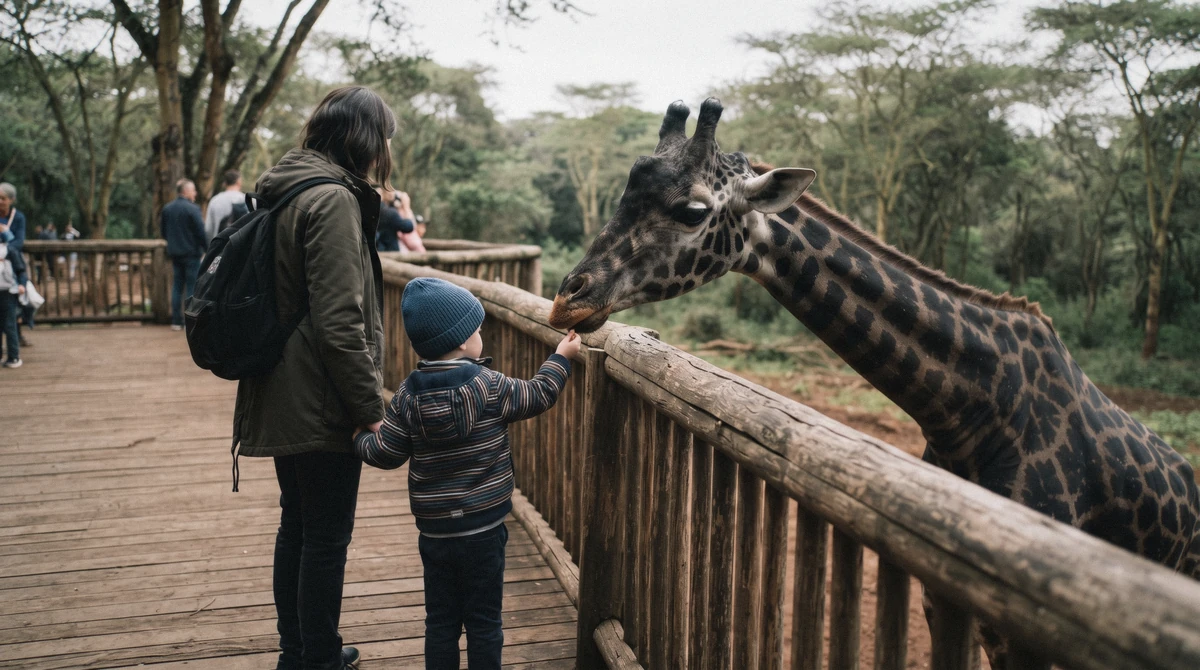
| Giraffe Centre | No age limit, all ages welcome | KSh750 for children versus KSh1,500 for adults | The raised feeding platform is reached by a staircase, worth knowing before carrying a napping toddler up it |
| Safari Walk and Animal Orphanage | No age limit, all ages welcome | $15 for children versus $25 for adults | The easiest under-5 outing on this list: flat paths, shade, and no standing crowd |
Every operator here draws the same line: none at all. There is no weight or size cutoff separate from age either, since seating is standard vehicle bench and bucket seats rather than a harness rig that would need its own sizing rule.
Car Seats and Booster Seats in the Safari Vehicle
Nairobi wildlife tours run in licensed commercial vehicles, open-rooftop minivans or pop-up-roof 4x4s operated by registered tour companies, the same category of vehicle as a licensed shuttle or taxi rather than a private family car. None of the operators on this site advertise a child car seat as standard equipment. If your child needs one, request it directly when booking or bring a portable travel harness of your own; do not assume one will be waiting in the vehicle.
Seatbelt setup varies by vehicle. Older minivans sometimes carry only lap belts in the rear rows, while newer pop-up-roof 4x4s tend to have three-point belts throughout. Ask which vehicle type is assigned before travelling with a toddler who needs a harness attachment point, since a lap-only belt won't accept most add-on harnesses.
Is It Safe for Kids?
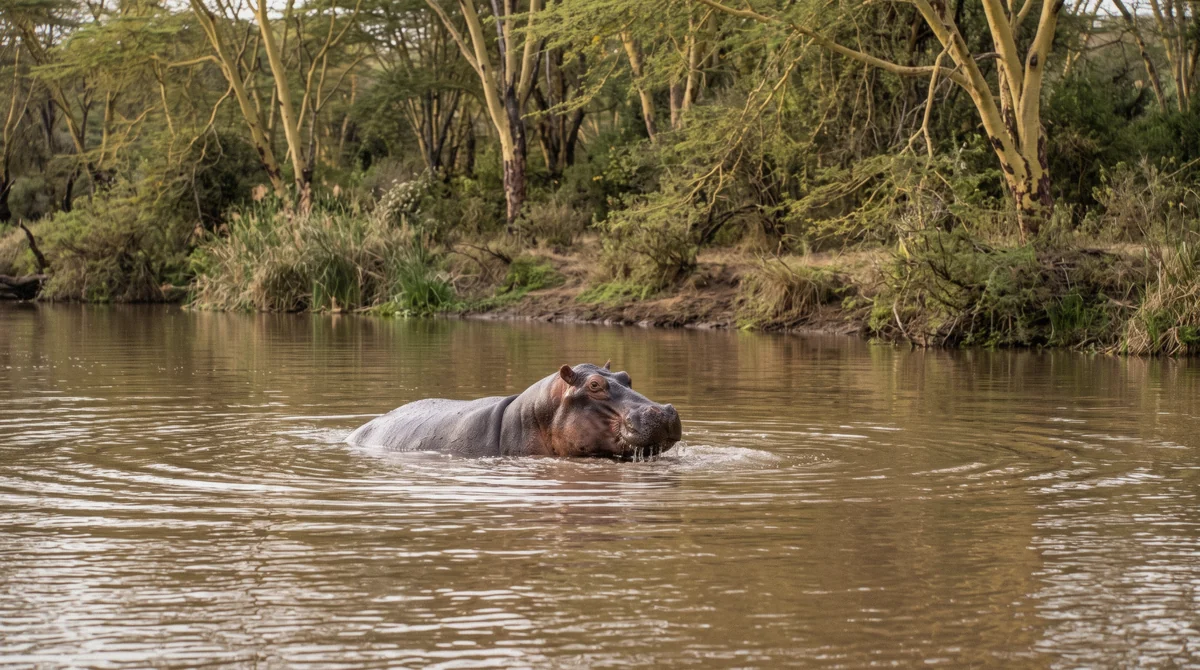
Every sighting on a standard family day happens from inside a seatbelted vehicle on a road network patrolled daily by Kenya Wildlife Service rangers. Aside from the gate complex, the only place anyone leaves the vehicle is the ranger-led Hippo Pools walk, and a guide is present the entire time. Two hazards are worth naming plainly for families specifically. First, the sun at 1,795 meters is stronger than the mild morning temperature suggests, since thinner air filters less ultraviolet light; shade, a hat, and reapplied sunscreen around midday matter more here than the weather implies. Second, vervet monkeys and baboons around the gate complex and picnic areas will take food directly from a child's open hand; guides brief visitors to keep snacks zipped away until seated, and the same rule protects small hands from a startled grab.
Guides watch specifically for kids leaning out of a pop-up roof for a photo and for a child drifting toward the edge of the Sheldrick viewing rail. For the park's broader safety record, the licensing authority behind it, and who should think twice before booking at all, our separate guide on whether Nairobi National Park is safe covers that ground in full; this section stays on the kid-specific angle only.
Is Your Child Ready? (Not Just About Age)
Because no ticket here enforces an age, it's tempting to assume any child is automatically fine. Readiness, not birthdays, is the real gate. A few markers worth checking honestly before you book:
- Tolerates a bumpy vehicle ride for two or more hours without real distress, a short car ride the week before is a fair test
- Stays reasonably calm in a tight, standing crowd, the Sheldrick hour is the closest comparison: a busy elevator lobby for sixty minutes
- Can climb, or be carried up, a flight of open stairs without panic, the Giraffe Centre's feeding platform is reached this way
- Keeps hands out of their mouth after touching a feeding pellet or a viewing rail, a hygiene marker rather than a fear marker
- Follows a single calm instruction like "stay seated" even while excited, a bus or train ride is a reasonable test of this beforehand
- Their attention span matches the block of time they'll actually be alert for, not the whole day's length, see the attention-span table below
A child who fails most of these markers will have a hard day regardless of age, and a child who passes them tends to do fine even younger than most parents assume.
Best Kid-Friendly Tours
A few tours suit families more naturally than the rest, mostly because of what they leave out rather than what they add.
- Giraffe Centre and elephant orphanage half-day tour, 6 hours: skips the long game drive entirely, which removes the single biggest attention-span risk on this list. Both stops have proper restrooms, unlike most of the park itself, and the smaller group size suits a child who needs more patience from the adults around them. The strongest fit for toddlers and children who tire of vehicle time quickly.
- Full combination day with the elephant orphanage, Giraffe Centre, and Nairobi National Park, 8 hours: the complete wildlife day, structured so the coolest part of the morning, the game drive, comes first, and the standing and platform stops land later once a child has warmed up. Suits families whose kids already manage a full school-day length outing.
- Private full-day tour, 7 hours: the pace belongs entirely to your group rather than a shared itinerary, so a meltdown, a nap, or a slow bathroom break doesn't cost anyone else their morning. The safest choice for a child whose tolerance is genuinely hard to predict.
Which Tour Fits Which Age Bracket
If you're traveling with a toddler under 4
the half-day Giraffe Centre and orphanage tour avoids the long game drive and keeps the day inside a toddler's real attention span.
If your child is 5 to 8
the same half-day combination or a fee-inclusive park and Giraffe Centre morning both work, since neither asks for more than a few focused hours at a time.
If your child is 9 to 12
the full combination day suits a child who already sits through a normal school day without trouble.
If you have a teenager, or a child whose tolerance is genuinely unpredictable
the private tour lets your group set its own pace and shorten anything that starts dragging.
If your family only has a short window, a layover or a single free morning
a shorter game drive alone covers the core experience without the afternoon stops.
What the Tour Feels Like for a Kid
Seen through a child's attention span rather than the marketing pitch, a family day breaks down like this:
- The 5:45 pickup in the dark is often the low point, a tired, cold child in an unfamiliar vehicle before sunrise
- The gate at 6:00 and the first twenty minutes are usually the high point regardless of age: fresh light, a rhino or a family of giraffes close to the road, the engine cutting to a whisper
- 6:15 to 8:30 is the most content stretch of the morning; animals are active and the vehicle keeps stopping, which resets a short attention span every few minutes
- 8:30 to 9:30, the dams and plains loop, is where younger children start to flag; sightings are more distant and the ride feels longer because nothing new is happening
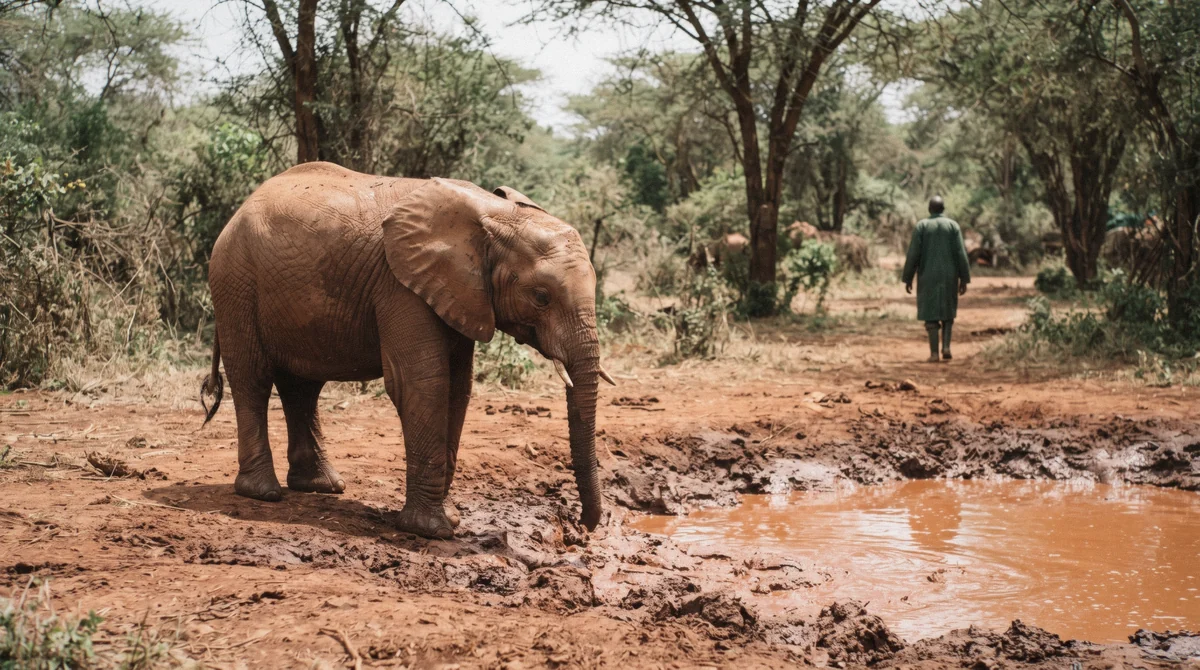
- If the day includes the Sheldrick hour at 11:00, that's usually a second wind, since it's the one moment a child gets genuinely close to the experience, even though standing in the crowd is real work for a small body
- The Giraffe Centre in the afternoon is nearly universal in appeal: feeding a giraffe from an open palm reads as magic to almost any child, and it's also the point in the day with the most shade and the easiest bathroom access
Duration matters more than any single moment. A four to five hour morning-only tour keeps every stretch inside a young child's tolerance. An eight to nine hour combination day has at least one stretch, the 8:30 to 9:30 loop, that a child under six will likely find long, and that's worth planning around rather than pretending away.
Age-by-Age: What Actually Works
Set beside the attention-span table below, this is the short version: what we'd actually plan for a family at each age.
| Child age | Our recommendation |
|---|---|
| 0 to 2 | Giraffe Centre and the Animal Orphanage only. Skip the game drive unless it lines up with nap time, and bring a carrier rather than a stroller. |
| 3 to 5 | A half-day plan works best: a short game drive paired with one attraction. Snacks decide how the day goes more than anything else. |
| 6 to 10 | The sweet spot. The full combination day works well at this age, and the wildlife spotting checklist below keeps kids scanning instead of fidgeting. |
| 11 and up | Treat them like adults with sharper eyes. Give each of them their own binoculars and the full day suits them fine. |
How Long Can Kids Actually Stay Engaged?
Attention span, not the clock, is what actually limits how a young child tolerates a day like this. No age group here loves every minute, and the honest boredom point is what a marketing page usually leaves out.
| Age band | Realistic focused-attention window | What that means for an 8-9 hour day | Signs it's time for a break |
|---|---|---|---|
| Toddler (2 to 4) | 20 to 40 minutes at a stretch | Runs well past a toddler's real limit more than once; a 4 to 5 hour morning-only tour is the honest match | Asking to get down, reaching for a parent, going quiet after being chatty |
| Young child (5 to 7) | 45 minutes to just over an hour | Handles the morning game drive well, but the 8:30 to 9:30 loop and the Sheldrick standing hour both run close to the edge | Fidgeting with a seatbelt or camera strap, repeating "are we done yet" |
| Older child (8 to 11) | Roughly 90 minutes to two hours | Fits comfortably, with the built-in stops working as natural breaks | Going quiet or short-tempered rather than restless |
| Tween or teen (12+) | Close to adult tolerance, two-plus hours | Any tour length here works; boredom, if it happens, comes from repetition rather than duration | Reaching for a phone instead of the window |
The Kids' Wildlife Spotting Checklist
Print this or keep it open on a phone. It turns a quiet back seat into a competition instead of a countdown.
- Lion
- Black rhino
- Zebra
- Maasai giraffe
- Ostrich
- Buffalo
- Hippo at the pools
- Crowned crane
What If My Child Gets Bored?
It happens, usually somewhere around the two-hour mark. The fixes that actually work: the spotting checklist above, rotating who gets the window seat at each stop, the small thrill of the guide's radio crackling with word of a fresh sighting, timing snacks to the slow stretches, and knowing when to call it early. A happy half day beats a miserable full one every time.
If a shorter format sounds like the safer bet, the short 4 to 5 hour option covers the core experience without the afternoon stretch that tests patience most.
What to Pack for Kids
No operator here issues child-size gear. There's no wetsuit or harness component to this niche, seatbelts are what's provided, and they're adult-sized, so a toddler who needs a harness attachment point should bring their own travel harness or car seat.
- Motion sickness: some children feel the dirt-track jostle on the dams loop; a light breakfast, steady hydration, and a forward-facing window seat help, and any dosing question for an anti-nausea remedy belongs with a pharmacist, not this guide
- Snacks matched to duration: a half-day tour needs one snack break; the eight to nine hour combination day genuinely needs a packed lunch or a plan to buy one, since meals aren't included on any tour here
- Sun protection sized for kids: a hat with a chin strap holds up better in an open-sided vehicle than a loose one, and sunscreen reapplied around midday matters more at 1,795 meters than the mild morning temperature suggests
- Hygiene at the touch points: hand sanitizer or wet wipes earn their keep at the Giraffe Centre feeding platform and after the Sheldrick viewing rail, both genuine hand-to-mouth risk points for small children
- What's actually provided: hotel pickup, and on some tours bottled water and vehicle Wi-Fi, are standard; everything kid-specific, car seat, snacks, sun gear, wipes, is on the parent
For the full adult packing list and seasonal layering advice, see our guide to what to wear on a Nairobi safari.
Food With Kids: What to Bring and Where to Eat
No food or water is sold inside the park itself, so pack sealed snacks and drinks before you leave the hotel and keep them zipped away in the vehicle rather than loose in a lap bag. Picnic sites exist inside the park, Kingfisher among them, but baboons and vervet monkeys watch these spots closely and will take food directly from a hand or an open cooler, so keep everything packed until everyone is actually seated and ready to eat. The Giraffe Centre has a small tea house for an afternoon snack or coffee, the easiest sit-down option on a combination day.
Karen itself has a normal range of family restaurants for a proper meal before or after the wildlife stops.
Restrooms, Changing and Baby Facilities
Restrooms exist at the Main Gate complex, the Giraffe Centre, and the Sheldrick elephant orphanage. Once you're out on the park's game drive circuit itself, there's nothing until the next stop, so a bathroom visit at the gate before setting off is worth the two extra minutes. Changing facilities are basic wherever they exist, essentially a regular restroom rather than a dedicated changing room, so a portable changing mat covers the gap.
If small bladders are a factor, plan the morning loop around a return to the Main Gate by around 9:30 rather than pushing the full circuit.
Strollers, Baby Carriers, and Getting Around with Gear
The park itself is entirely vehicle-based, so a stroller has no real use once you're through the gate; leave it in the vehicle or the hotel room for park-only mornings. The Sheldrick viewing area is an open, sometimes dusty standing space with real crowd density during the 11:00 hour, and a soft carrier or sling works far better there than pushing a stroller through that crowd. The Giraffe Centre involves a staircase to the feeding platform that a stroller simply cannot climb, so plan for a carrier or for one adult to carry a toddler up while the other manages bags.
If a stroller genuinely matters for the rest of your trip, most vehicles have room to stow a folded one for transit between stops, but confirm that with your operator before pickup rather than assume it.
Best Time of Year to Bring Kids
For families, June through October gives the most forgiving combination of dry roads, wildlife gathered near the waterholes, and mild midday heat, though mornings are the coldest of the year and a real jacket matters more in this window than any other. January and February run warmer and drier still, with newborn animals around and lighter crowds than the mid-year peak, often the easier season for a family that struggles with the pre-dawn cold. Whatever month you choose, an early start does more for a good day than the season does; a 6:00 arrival beats a 9:00 one at any time of year.
Our full month-by-month breakdown lives in the best time to visit Nairobi National Park guide.
Frequently Asked Questions
Is there a minimum age for Nairobi National Park or the Giraffe Centre?
No operator here sets one; every attraction admits any age. The honest limit is attention span and standing tolerance, not a number on a ticket.
Can a 2-year-old or 3-year-old actually handle a full day like this?
Most toddlers manage a four to five hour morning-only tour reasonably well. An eight to nine hour combination day runs well past a toddler's real attention span more than once, so a shorter tour or the half-day Giraffe Centre and orphanage combination is the honest match.
Is it safe to bring young kids this close to lions and rhinos?
Every sighting happens from inside a seatbelted vehicle on a Kenya Wildlife Service patrolled route, and the only two places anyone leaves the vehicle are the gate complex and a ranger-led walk at the Hippo Pools. For the park's full safety record and rules, see our guide on whether Nairobi National Park is safe.
Do kids get a discount?
Yes at three of the four attractions: the park fee is roughly half for children, the Giraffe Centre charges KSh750 versus KSh1,500 for adults, and the Safari Walk charges $15 versus $25. The Sheldrick elephant orphanage's roughly $47 conservation levy is the same for every age, with no child rate.
Will my kid get bored, and how long is the day really?
A morning-only tour runs three to five hours and stays inside most children's real tolerance. A full combination day runs eight to nine hours, and the 8:30 to 9:30 dams loop is the stretch most young children find long; the Sheldrick and Giraffe Centre stops that follow tend to revive interest.
Do I need a car seat for the tour vehicle?
None of the operators here supply one as standard equipment. Bring a portable travel harness for a toddler, or ask your operator in advance what seatbelt type their vehicle has, since older minivans sometimes carry only lap belts in the rear.
What if my child gets tired, scared, or needs a break partway through?
On a shared game drive there's no formal early-return option since the group moves together, but guides are used to short unscheduled stops for a bathroom break or a breather. A private tour removes this limitation entirely, since the pace is yours to set.
There's no age gate standing between your family and Nairobi National Park, the Giraffe Centre, or the Sheldrick elephant orphanage. What decides whether the day works is duration matched to your child's real attention span: a four to five hour morning for a toddler, a full combination day once a child handles a normal school day without trouble. The half-day Giraffe Centre and orphanage tour is the safer bet for young children, and a private tour is worth the difference in price if your child's tolerance is genuinely hard to predict.
If this is your family's first safari altogether, our step-by-step first time safari in Nairobi guide walks through exactly what to expect.