12 Nairobi Safari Mistakes to Avoid (Local Tips)
The costliest Nairobi safari mistake we see is booking the David Sheldrick elephant orphanage for any time other than its single 11:00 to 12:00 public hour, which fails outright with no refund and no second chance that day. We see the same handful of mistakes every week, and nearly all of them are avoidable with one piece of local knowledge you won't find on a generic packing list. This guide walks through every one chronologically, from the booking stage through timing, money, packing and etiquette, with a quantified cost and a real fix for each. It also covers the things to know before you book that don't fit neatly into a single mistake but trip people up anyway. If you're still comparing options, every operator worth planning a Nairobi zoo tour around is compared on our homepage.
Quick answer
The single costliest mistake is booking the David Sheldrick elephant orphanage for any time other than its 11:00 to 12:00 public hour, which fails outright with no refund and derails whatever else was planned around it that day. We see the same handful of mistakes every week, most of them fixable with a few minutes of planning the night before.
Key takeaways
- The single costliest mistake is booking the Sheldrick elephant orphanage outside its 11:00 to 12:00 public hour, which fails outright with no second chance that day
- Arriving at the park gate at noon instead of 6:00 trades the best sightings for flat light and flattened cats
- Assuming cash works at any gate costs real time, since every fee here runs through eCitizen, card or M-Pesa
- Treating this park like a Masai Mara-scale trip sets up a letdown that has nothing to do with the wildlife itself
- See the dos and don'ts list near the end for the compressed version of everything below
The Mistakes at a Glance
Every mistake below in one table, in the same order as the detailed sections that follow.
| Mistake | What it costs you | The fix |
|---|---|---|
| Booking the Sheldrick orphanage for any time except 11:00 to 12:00 | The visit fails outright with no refund, and it usually derails the rest of your day's sequence | Book the 11:00 hour first, then build everything else around a 10:45 arrival |
| Self-driving a sedan into the park during the long rains | Getting stuck axle-deep in black cotton mud, sometimes a costly tow | Book a tour with a 4x4 instead of self-driving between March and May |
| Leaving your eCitizen payment for gate-side signal | Standing at a weak-signal gate at 6:00 trying to finish a mobile payment while your vehicle waits | Pay through eCitizen the night before, on hotel wifi |
| Arriving at the park gate at noon instead of dawn | Flat midday light and cats already flattened into the shade for the day | Arrive for the 6:00 gate opening instead |
| Visiting the Giraffe Centre on a school-holiday weekend mid-morning | A genuine queue for the feeding platform instead of a calm few minutes with a giraffe | Visit in the afternoon, or on a weekday morning |
| Assuming cash works at any gate | Lost time working out a payment fix while a vehicle full of people waits on you | Carry a working card and an active M-Pesa balance |
| Not reading a tour's fee inclusions before comparing prices | Paying for the same park entry twice, once folded into the tour price and once again at the gate | Read the inclusions line, not just the sticker price |
| Tipping only in large USD bills | Your guide eats a real exchange-rate loss converting a large bill informally | Tip in small local notes or M-Pesa instead |
| Forgetting binoculars, especially on a self-drive | A distant rhino or cheetah reduced to a grey dot no phone zoom fixes | Pack your own, tours rarely carry loaners |
| Wearing bright white on a game drive | Dust shows immediately, and it stands out more than muted tones at a close sighting | Stick to khaki, olive or tan instead |
| Leaving food unsealed at a picnic site | A baboon or vervet monkey grabbing it directly from your hand or an open cooler | Keep everything zipped away until you're seated and ready to eat |
| Skipping the park entirely because it isn't the Masai Mara | Missing an affordable, genuinely good half-day of wildlife over a scale mismatch that has nothing to do with quality | Book it as a complement to a bigger trip, not a substitute for one |
| Booking an afternoon drive expecting lions | Cats are morning animals here, so an afternoon slot often means resting, hidden animals instead | Book a morning drive and treat any afternoon slot as a backup, not the plan |
| Expecting to see elephants in the park itself | This park has none, so a park-only itinerary misses them entirely | Add the Sheldrick orphanage visit for the elephant encounter this park can't provide |
| Letting a phone or camera battery die at the wrong moment | Cold dawn air drains a battery fast, and there's no charging point inside the park | Charge fully overnight and carry a spare kept in a warm pocket |
| Planning around Mara-style Great Migration scenes | This park has a local Athi-Kapiti movement, not river crossings, so that expectation goes unmet | Come for the resident wildlife and the rhino sightings this park actually delivers |
| Ignoring Nairobi traffic when planning a 9:00 city departure | Arriving well after the gate opens usually means flat midday light instead of the morning's best hour | Build in real traffic time, or start from the 6:00 gate opening instead |
| Exchanging all your money at the airport desk rate | The airport rate is usually the weakest one available on the whole trip | Change a small amount there for immediate needs and use a card or a better rate in town for the rest |
Mistake #1: Booking the Sheldrick Orphanage for the Wrong Hour
The David Sheldrick elephant orphanage runs exactly one public hour a day, 11:00 to 12:00, and it must be booked ahead. We see visitors book an afternoon slot that simply does not exist, or arrive at 11:20 assuming a little lateness is fine, and both mistakes end the same way: watching the gate rather than the elephants, with no refund and no second visit available that day.
The cost is worse than the missed hour itself. Most visitors chain the orphanage into a day that also includes the park and the Giraffe Centre, and the whole sequence is built around that 11:00 slot. Miss it, and the rest of the day's timing unravels along with it.
What to do instead: book the 11:00 hour before you plan anything else, and leave your hotel with enough buffer that traffic can't push you past 10:45 at the entrance. Our entry fee guide walks through exactly how advance booking works for every attraction on this side of the city, not just the park itself.
Mistake #2: Self-Driving a Sedan Into the Park During the Long Rains
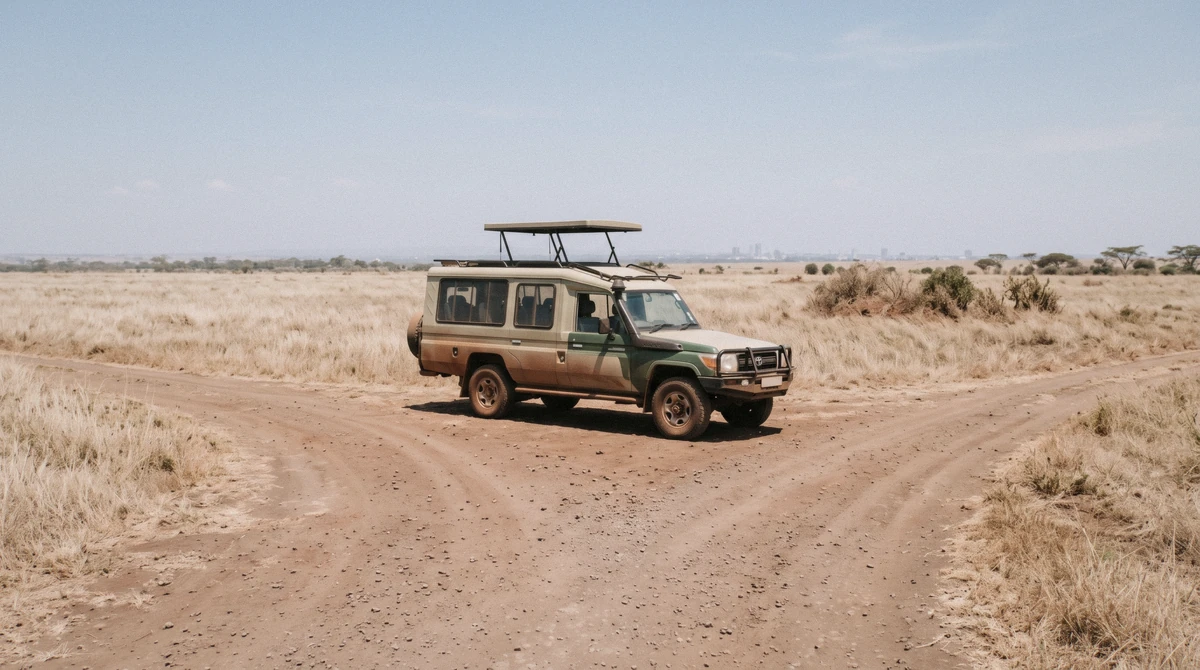
Large sections of the park sit on black cotton soil, and after sustained rain those tracks turn to thick, tyre-grabbing mud within hours. An ordinary saloon car that handles the dry season fine can get stuck axle-deep on the same route in April, sometimes for long enough that a costly tow is the only way out.
This is a booking-stage mistake more than a driving one: the error happens when you decide to self-drive at all during March through May rather than choosing a tour with a proper 4x4.
What to do instead: book any visit during the long rains as a guided tour with a 4x4 rather than attempting it in your own sedan. Our entry fee guide covers what a fee-inclusive tour actually bundles beyond just the vehicle itself, useful context when you're weighing the extra cost against a stuck-in-the-mud afternoon.
Mistake #3: Leaving Your eCitizen Payment for Gate-Side Signal
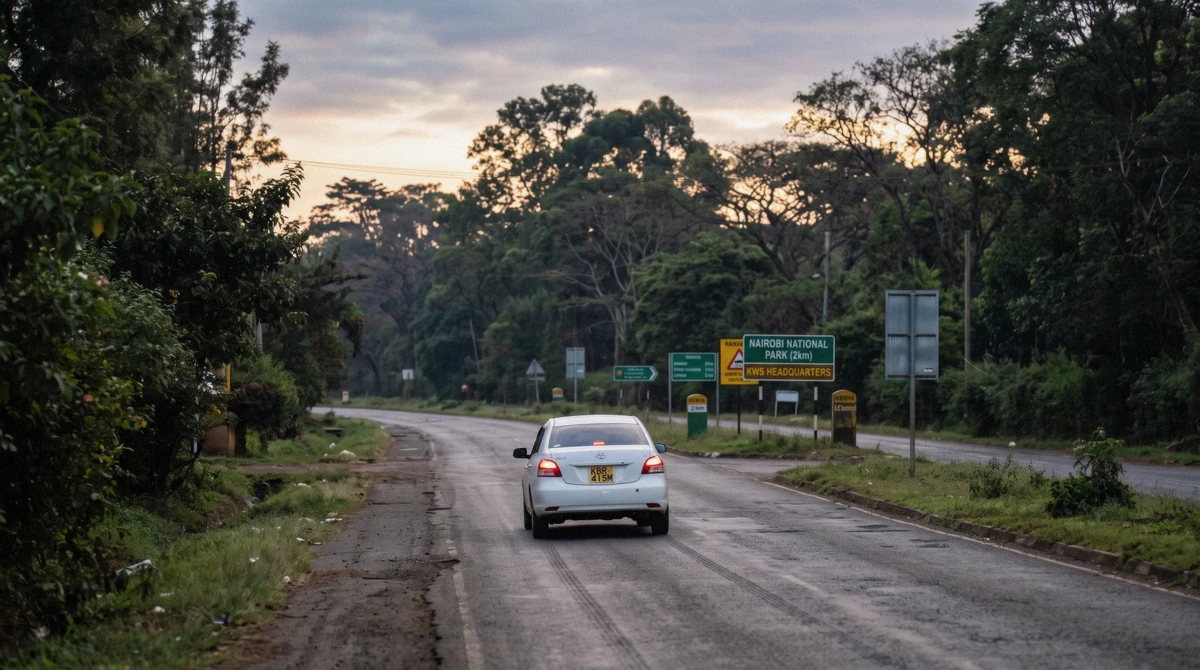
Every Kenya Wildlife Service fee now runs through the eCitizen platform, and it works fine from a hotel room the night before. It works far less reliably at the gate itself at 6:00 in the morning, when signal is weak and a vehicle full of people is waiting on you to finish a payment screen that keeps failing to load.
We've watched this cost visitors their spot in the queue behind them, and occasionally the best of the morning's light while the payment finally goes through.
What to do instead: create your eCitizen account and complete payment the evening before, on working hotel wifi, and keep the confirmation saved offline on your phone. Our entry fee guide has the full walkthrough of how the platform handles bookings and what to do if a number on this page ever disagrees with what you see at checkout.
Mistake #4: Arriving at the Park Gate at Noon Instead of Dawn
The single biggest timing mistake on this whole list is showing up mid-morning or at midday instead of the 6:00 gate opening. Cats are far less active once the day has warmed, most animals have retreated toward shade, and the light itself turns flat and harsh rather than the soft gold of the first hour.
The cost is the whole point of the trip: a noon arrival can mean a genuinely quiet couple of hours where a dawn drive would have delivered lions, rhino and steady activity across the plains.
What to do instead: arrive for the 6:00 gate opening every time, regardless of season. Our best time to visit guide covers why the hour of the day matters more here than the month you choose.
Mistake #5: Visiting the Giraffe Centre on a School-Holiday Weekend Mid-Morning
The Giraffe Centre's raised feeding platform is reached by a single staircase, and on a school-holiday weekend mid-morning it genuinely queues, turning what should be a calm few minutes with a giraffe into a wait behind several other families.
The cost is mostly patience rather than money, but it's a real dent in what's usually the most universally loved stop of a combination day.
What to do instead: visit in the afternoon, or on a weekday morning outside school holidays, when the platform runs close to empty. Our best time to visit guide flags the other seasonal crowd patterns worth planning around beyond just this one.
Mistake #6: Assuming Cash Works at Any Gate
Nairobi's wildlife attractions have moved decisively to cashless payment. The park runs entirely on eCitizen, and the Giraffe Centre and Sheldrick orphanage both take card or M-Pesa rather than dollars or shillings handed over at a desk. Visitors who assume otherwise, often based on advice that was accurate a few years ago, lose real time working out a fix at the gate.
The cost is time and stress rather than money directly, but it's the single most common source of a frustrated first hour we hear about.
What to do instead: carry a working card and an active M-Pesa balance, and keep only a small amount of physical cash for tips and informal purchases. Our wildlife attraction prices guide confirms exactly how each individual gate takes payment.
Mistake #7: Not Reading a Tour's Fee Inclusions Before Comparing Prices
A cheaper-looking tour price can hide a bigger total than a more expensive one, purely because of whether park fees are folded in. We've watched travelers book the lower number, then pay park entry again separately at the gate, effectively double-paying for the same thing without realizing it until the numbers are added up afterward.
The cost is real money, often the difference between a fee-inclusive tour and a bare-bones one once the entry fee is counted twice.
What to do instead: read the inclusions line on any tour before comparing its price to another, not just the headline number. Our wildlife attraction prices guide puts every fee side by side so the comparison is honest rather than misleading.
Mistake #8: Tipping Only in Large USD Bills
Tipping a guide $20 or $50 in one large USD bill feels generous, but it leaves them to convert it informally, often at a worse rate than a bank would offer, which quietly eats into the actual value of the tip. The same problem applies in reverse when a large bill needs breaking for change nobody nearby is carrying.
The cost lands on your guide, not you, in the form of a real exchange loss on money you intended as a straightforward thank you.
What to do instead: tip in small local notes or through M-Pesa instead of large foreign bills. Our wildlife attraction prices guide covers the going tipping norm, roughly $5 to $10 per person for a driver-guide, in more detail.
Mistake #9: Forgetting Binoculars, Especially on a Self-Drive
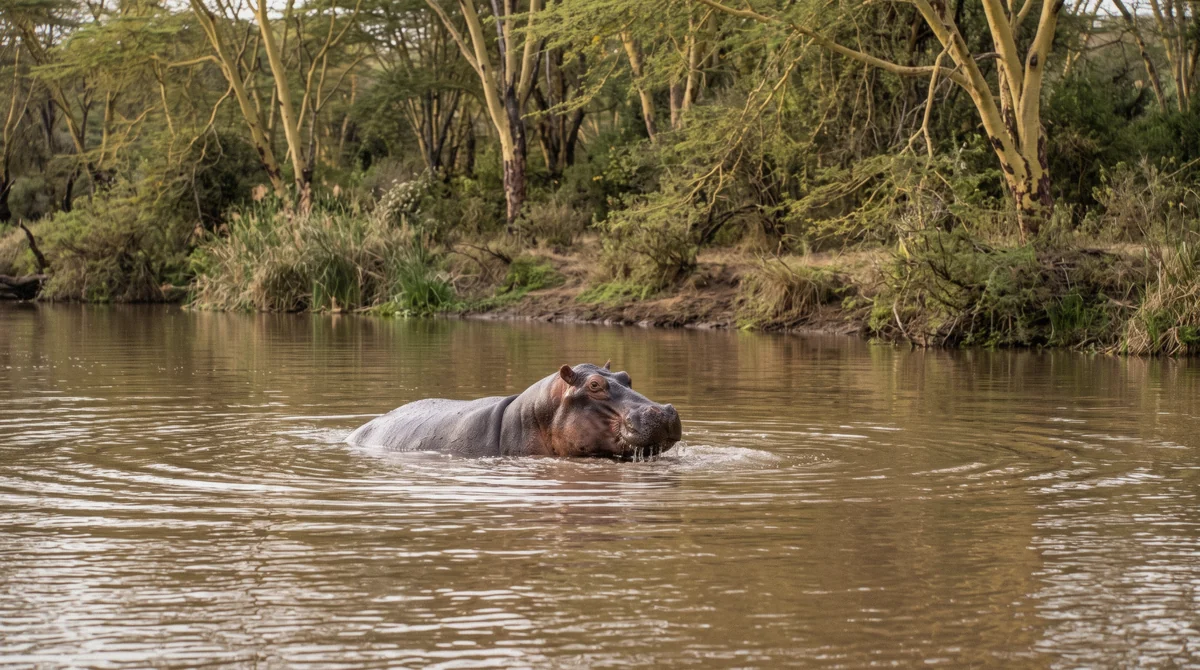
Rhino and cheetah in particular are often spotted at genuine distance rather than close to the track, and a phone's zoom simply cannot recover detail a pair of binoculars would show clearly. Self-drivers feel this the most, since there's no guide's own pair to borrow the way there sometimes is on a guided vehicle.
The cost is a missed detail rather than a missed sighting outright, a grey shape on the plains instead of the animal you actually came to see.
What to do instead: pack your own binoculars before you leave, since tours rarely carry loaner pairs as standard equipment. Our what to wear guide covers this alongside the rest of what's worth bringing and what tours typically provide.
Mistake #10: Wearing Bright White on a Game Drive
White shows every speck of red dust within the first hour of a drive, and it stands out more at a close sighting than the muted tones most guides quietly favor for exactly that reason. It's a small mistake, but it shows up in nearly every photo from the day once the dust has settled onto pale fabric.
The cost is mostly cosmetic, dusty photos and a shirt that needs an extra wash, though bright colors can also draw more attention at a close wildlife sighting than a neutral tone would.
What to do instead: stick to khaki, olive, tan or grey instead. Our what to wear guide has the full color reference, including which shades to avoid and why.
Mistake #11: Leaving Food Unsealed at a Picnic Site
Baboons and vervet monkeys around the park's picnic areas and gate complex watch loose food closely, and they will take it directly from a hand or an open cooler the moment it's within reach. This isn't a rare fluke story, it's routine enough that guides brief every group on it before lunch.
The cost ranges from a lost sandwich to a genuine scratch or grab if someone tries to hold onto food an animal has already decided is theirs.
What to do instead: keep all food sealed and zipped away in a bag until everyone is actually seated and ready to eat, never left loose on a table or an open cooler lid. Our first time safari guide covers the rest of the etiquette that keeps a sighting, and a picnic stop, calm for everyone involved.
Mistake #12: Skipping the Park Entirely Because It Isn't the Masai Mara
This is the myth that quietly suppresses more bookings than any pricing or timing mistake on this list. Nairobi National Park covers 117 square kilometers, a fraction of the Masai Mara's scale, and travelers who compare the two directly sometimes decide the smaller park isn't worth the morning at all.
The cost is missing out on a genuinely good, affordable half-day of wildlife, rhino sightings here are more reliable than in most of Kenya's larger parks, purely because of a scale comparison that has nothing to do with the quality of what's actually inside the gate.
What to do instead: treat it as a complement to a bigger trip rather than a substitute for one. If the Masai Mara is already on your itinerary, this park still earns a spare morning or a layover on its own terms. Our honest look at whether it's worth it covers the full comparison without either overselling or underselling either park.
The Mistakes Almost Nobody Warns You About
The twelve above are the ones with a clear fix. These five are quieter, and they mostly come down to a mismatch between expectation and how this specific park actually works.
- Booking an afternoon drive expecting lions: cats are morning animals here, and an afternoon slot usually means resting, hard-to-spot animals instead
- Expecting to see elephants in the park itself: this park has none at all, and a park-only itinerary misses them entirely
- Letting a phone or camera battery die at exactly the wrong moment: cold dawn air drains a battery fast, and there's no charging point inside the park
- Planning around Mara-style Great Migration scenes: this park has a local Athi-Kapiti movement instead, not the river crossings that made the Mara famous
- Ignoring Nairobi traffic in the plan: a 9:00 city departure usually means arriving in flat midday light instead of the morning's best hour
The one we learned ourselves
We once left the city at 8:40 on a Friday. The drive to the gate took 74 minutes, the cats were already flat by arrival, and the whole morning produced two distant rhino and a lesson: the 6:00 gate is not a suggestion.
Money Mistakes, Specifically
Money mistakes here are rarely about the big numbers. They're small, avoidable frictions that add up over the course of a day.
- Tipping in large USD bills only, when your guide has to convert it informally, often at a worse rate than a bank would give: carry small local notes or use M-Pesa instead
- Leaving eCitizen payment for gate signal, when weak connectivity at 6:00 can hold up your whole vehicle: pay the night before on hotel wifi instead
- Double-paying park fees on fee-inclusive tours by not reading what's actually included: check the prices guide before comparing two tours on price alone
- Exchanging all your money at the airport desk rate for the entire trip: it's usually the weakest rate available anywhere on the trip, so change a small amount there and handle the rest with a card or in town
- Assuming the Giraffe Centre takes cash: it runs on card or M-Pesa, the same as the Sheldrick orphanage
Dos and Don'ts
If we could go back and tell a first-time visitor one thing, it would be this: book the Sheldrick hour before anything else. Nearly every other mistake on this list is recoverable partway through the day. That one usually isn't.
Do
- Book the Sheldrick 11:00 hour before planning anything else that day
- Pay eCitizen fees the night before, on working hotel wifi
- Arrive at the gate for the 6:00 opening
- Carry a working card and an active M-Pesa balance
- Pack your own binoculars
Don't
- Self-drive a sedan into the park during the long rains
- Assume cash works at any gate
- Tip only in large USD bills
- Wear bright white on a photo-focused drive
- Leave food unsealed at a picnic site
Frequently Asked Questions
Is Nairobi National Park safe?
Yes, by any reasonable standard, with sightings happening from inside a seatbelted vehicle on a Kenya Wildlife Service patrolled route. Our full safety guide covers the details in full rather than repeating them here.
How far ahead should I book a Nairobi safari?
A few days ahead is usually enough outside July and August, when school holidays abroad fill the busiest morning slots faster. Booking a week or more out protects your pick of the 6:00 morning departure.
What shouldn't you do during a Nairobi National Park game drive?
Stay seated while the vehicle moves, keep your voice down at a sighting, and never feed anything, including the baboons and vervet monkeys near the gate and picnic areas. All three are routine guide briefings, not unusual precautions.
What happens if my Nairobi safari gets rained on or cancelled?
Drives rarely cancel outright for rain. Vehicles keep running through the light-to-moderate showers typical of the wet seasons, and sustained rain mostly just shifts routes onto slower four-wheel-drive tracks rather than stopping the morning.
Do you need to tip on a Nairobi safari?
Yes, roughly $5 to $10 per person for a driver-guide is the accepted norm, paid in small local notes or through M-Pesa rather than a single large foreign bill.
Is it a mistake to skip Nairobi National Park because it's smaller than the Masai Mara?
Often, yes. The park earns its own morning on different terms than the Mara, reliable rhino sightings and genuine proximity to the city chief among them, and it works best as a complement to a bigger trip rather than a replacement for one.
Do baboons or monkeys actually bother visitors here?
Around the gate complex and picnic sites, yes, routinely. They watch loose food closely and will take it directly from a hand or an open cooler, which is why every guide briefs groups to keep food sealed until seated.